
13 May 2017
Deep within the jungles of the equator and tropics lies a hidden secret. One that has existed unharnessed, in symbiosis with its flora and fauna, period unknown. A secret, only known to select tribes who call these jungles their home. A secret, only recently unmasked by man’s growing desire for novel and unique taste experiences.
This secret, you may have guessed, is cacao. Wild, with minimal human intervention. Presumably hybrids of the key varieties – forastero, criollo and trinitario.
Over the past weekend, I was fortunate enough to catch up with Ning – owner and founder of Chocolate Concierge. A person so passionate about novel and unique chocolate taste experiences that he goes “cacao hunting” in the depths of the Malaysian jungles. A physicist turned app developer in his past life, Ning is part of a small but growing movement of artisan bean to bar chocolate makers in South East Asia. I’m surprised to discover that he’s been in the business for 9 years; almost a “veteran” in the bean to bar world!
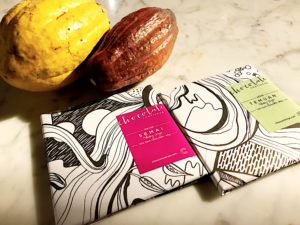 I’m super keen to discover Chocolate Concierge‘s Pahang origin bars, a first for me in terms of Malaysian single origin, bean to bar artisan chocolates. Ning has done one better. He’s brought some along for tasting as we talk about all things cacao and chocolate.
Temuan – Pahang Origin
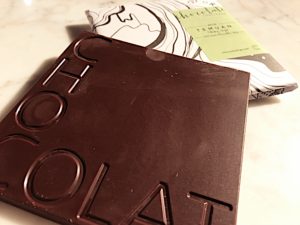 We start off with the Temuan 70% dark chocolate, named after the tribe that collects the wild cacao pods in the jungles of Pahang, the state in the heart of Peninsular Malaysia. Ning extracts the beans then ferments and roasts them, hence the term “Pod to Bar” on the label. I take my first whiff and immediately, my senses are awash with the scents of dried plum/ prunes, honey and traces of spiciness. The chocolate has a sharp snap, an indication of good tempering – not an easy feat in the Malaysian humidity and heat, I might add. The chocolate is acidic and fruity, the flavours resembling prunes. There’s a hint of coffee and mild smokiness, but a clean aftertaste.
Semai – Pahang Origin
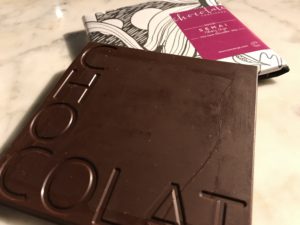 Next up, the Semai 70% dark chocolate. This is apparently the very first batch, made from wet beans harvested and extracted by the Semai tribe in Pahang. Ning meticulously ferments and roasts the precious beans, to showcase their unique flavour profile. The aromas are distinctly tropical and very different to the Temuan bar – think mangoes and lanzones (tropical fruit also known as langsats). The chocolate is well tempered, as characterised by the sharp snap. This bar is also acidic and fruity, with a tropical slant, most prominently tasting of mangoes with the freshness of green apples. It has a long finish and leaves a clean aftertaste in my mouth.
Cacao Treat
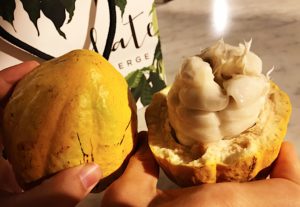 Ning surprises me with the piece de resistance, when I think that things can’t get any better. He presents me with two beautiful and distinctly different cacao pods. We break one of them open and savour the tasty morsels encapsulated within it. The beans are surrounded by a layer of pulp or mucilage, the flavours of which closely resemble the tropical fruit mangosteen; fruity, slightly sour and pleasantly sweet. The beans, on the other hand, are rather tasteless. This has certainly given me a better appreciation for the downstream processes of fermentation and roasting, which brings out the flavours and unique characteristics of the beans.
The Verdict
Ning has done justice to his wild cacao discoveries. I’m impressed by the depth and complexity of flavours in both single origin bars. However, my clear favourite is the Semai for its tropical fruitiness and freshness.
I am grateful for this experiential chocolate session and wish Ning the very best as he continues to unveil, perfect and showcase the beauty and uniqueness of wild Malaysian cacao to chocolate connoisseurs around the world.
Does this rate as an ultimately chocolate experience? Of course! For the opportunity to savour the “fruit of the gods” in its most natural state and to discover the unique flavours of wild Malaysian cacao.
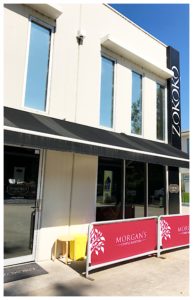 Situated in Emu Heights, at the base of the Blue Mountains, and tucked away in a light industrial estate, it’s the stop that every chocolate lover should make before they ascend the Mountains. This is THE place where
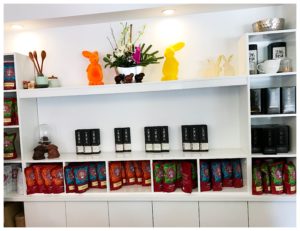
 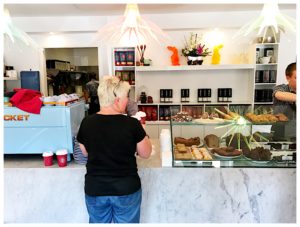 The cafe and shopfront is bright and buzzy, with a central glass display lined with tasty chocolate treats of cakes, pastries, biscuits and their very own chocolate ganaches. The shelves in the cafe serve as a showcase of their entire collection of chocolate bars, drinking chocolates, cocoa powder, cocoa nibs and Morgan’s Coffee. And to the back is where all the action happens – their manufacturing facility. No photos allowed, unfortunately.
 While we are here, there is no end to the throng of customers who stream in and out of the shop. Perhaps it’s the last minute Easter rush but I suspect that this is the norm.
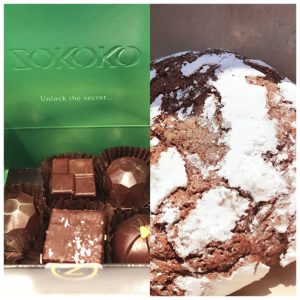 My recommendation is to grab yourself a hot chocolate or coffee and a chocolate treat, then sit down and soak in the atmosphere of
  It seems like the whole of Sydney has decided on the exact same road trip, at the same time. The queue snaking up to the top of the Mountains starts at the base and moves painfully slow. Thankfully, after a hearty lunch at
 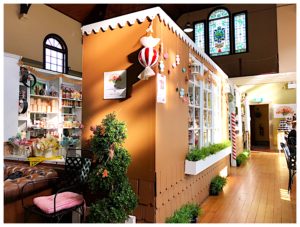 As the name suggests, it’s almost fairy tale-like inside. Tables are lined along the edges of the walls and surround a central service and retail area filled with house-baked Gingerbread, cakes, brownies, cookies and muffins as well as ice cream, chocolates and vibrant coloured lollies in many shapes and forms. Hansel and Gretel, eat your heart out!
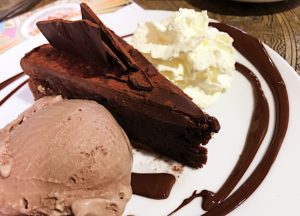 We sit down to a serve of Josophan’s legendary Mexican chocolate cake, accompanied by a scoop of “Death by Chocolate” ice cream, whipped cream and a cup of chai tea. This signature cake is made purely with Belgian couverture chocolate; the result is a deliciously rich and intensely dark tasting treat, with just the right level of sweetness. It hits the spot for me.
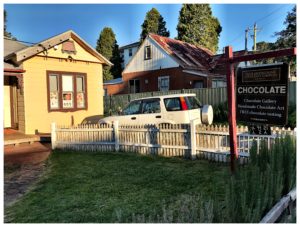 After a refreshing walk to Echo Point Lookout and a quick photo-taking opportunity of The Three Sisters, we chance upon a cute cottage housing this chocolate discovery.
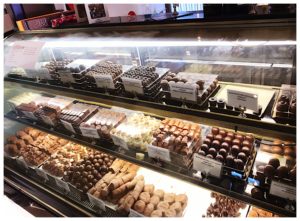 The
The 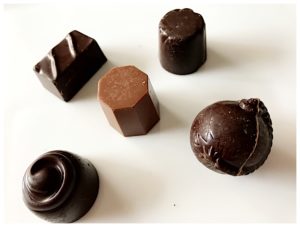 For something a little different, try the popping chilli bomb (dark chocolate chilli ganache with the added touch of popping candy), dark chocolate chestnut praline made with locally grown chestnuts, and the dark and milk chocolate banoffee (molten banana flavoured caramel, encased in milk and dark chocolate).
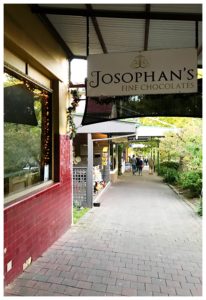 A trip up to the Mountains is incomplete without an obligatory visit to Josophan’s. Sadly, they are closed by the time we reach Leura. The consolation is that I have easy access to Josophan’s in Sydney. Better luck next time.
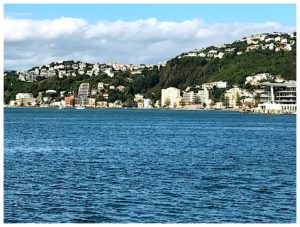 Ask visitors about the capital of New Zealand and chances are, “Windy Wellington” will roll off their tongues. Others may allude to the iconic, antique red cable car that runs up the steep hill through the Botanical Gardens, the brilliant blue harbour that houses the heart of the city, Lambton Quay, or the hip and happening Cuba street district with its vibrant food and craft beer scene.
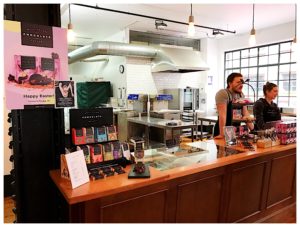 My first destination is one that I’ve been eagerly anticipating. Established as recent as 2013, this young and dynamic homegrown chocolate maker is already making waves in the craft chocolate world.
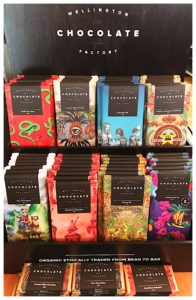 Perhaps it’s because their chocolates are proudly organic, bean to bar and single origin. Maybe it’s their strong social and economic stance on ethically (fair or direct) traded cacao beans. Or simply that they make great tasting chocolate by applying their unique flair such as conching for 2.5 days and ageing the conched chocolate for a month.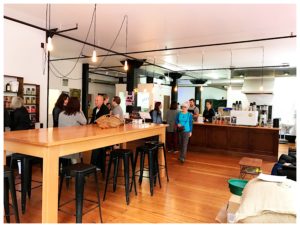
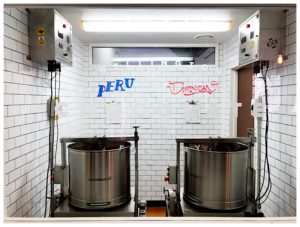 The highlight of the tour is definitely the tasting. On offer is the whole single origin range, namely the Peru Norandino 70%, Dominican Republic 70%, Samoa 77% Bouganville 70%, plus specialty bars such as the coconut milk chocolate 52%. My top pick is the Dominican Republic 70% – intense flavours of citrus, with bursts of nuttiness, in an acidic bar with trace notes of bitterness. As for intrigue, the honours goes to the Bouganville 70% for its rarity, zero emissions status and smoked dried beans. The people’s choice is apparently the salted brittle caramel 70%.
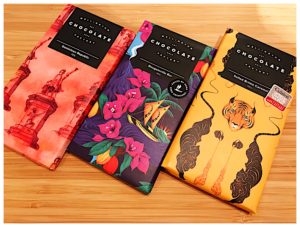 To top off the tour, visitors are served a single origin hot chocolate to enjoy while they soak in the lively atmosphere at the WCF.
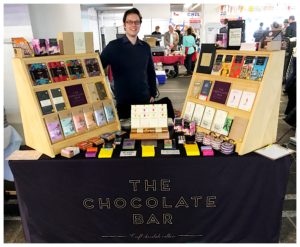 Next up, I’m off to visit a person whose growing passion for chocolate is highly infectious and has led him to his current calling. Luke is the owner of The Chocolate Bar, a retailer and enthusiast of craft chocolate based in Wellington. He sources his chocolates from within New Zealand and the world over, and retails them online as well as through pop up stores. He also runs chocolate appreciation courses in partnership with establishments such as breweries, wine shops, wineries as well as tea shops.
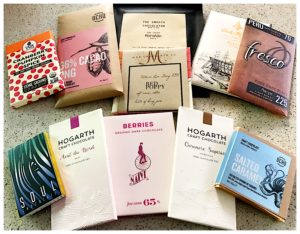 More importantly, I finally get to taste and purchase elusive craft chocolates from makers like Ocho, Hogarth, The Smooth Chocolator, Map Chocolate, Naive, Soul and many more.
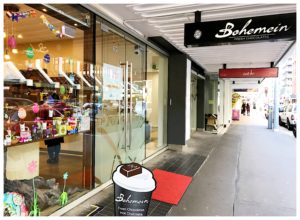 The attraction here starts with how one pronounces its name….bo-he-mee-un or bo-he-mine or bo-he-mane? I’ll leave you to figure this out.
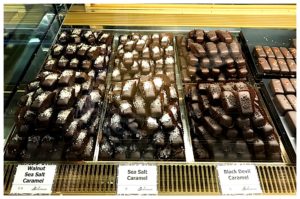 Visitors to Bohemein are also treated to a mouth watering array of meticulously crafted and preservative free ganaches, creams and truffles, spun from the freshest ingredients, in a classy European-style setting. For those who enjoy their chocolates hot or warm, customize your hot chocolate by working off their hot chocolate menu.
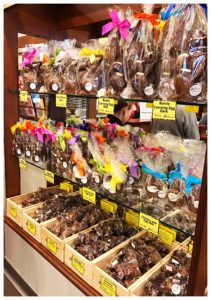 Since Easter is just around the corner, the shelves are filled with endless varieties of chocolate eggs and bunnies, including their highly popular milk and dark chocolate bunnies filled with chocolate caramel, cinnamon caramel and mulled port ganache.
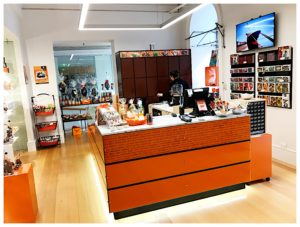 I’m both shocked and impressed by the gourmet chocolate range at Schoc. They may be boutique in size but it doesn’t stop them from churning out 60 different varieties of bars/ tablets and an equally impressive range of ganaches, truffles, caramels and creams. One is clearly spoilt for choice.
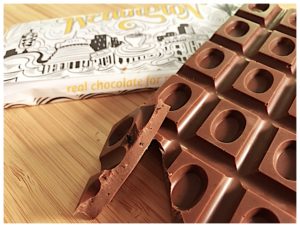 The caramels, both dark bitter and soft butter caramels, are “must-tries”, as are the truffles such as lavender salted caramel and honey cumin. My friends at
 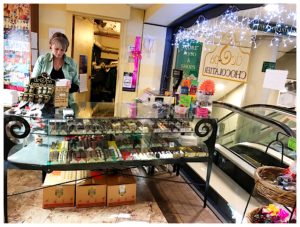 This discovery is courtesy of my newfound friends at Bohemein. Housed in a traditional, cozy setting and tucked in the beautiful Old Bank Arcade, the chocolates here reflect the ambience of the shop and building. The chocolatiers at De Spa skillfully handcraft up to 70 different varieties including ganaches, truffles, creams, caramels and bars using Callebaut Belgian couverture chocolate and fresh, locally sourced ingredients.
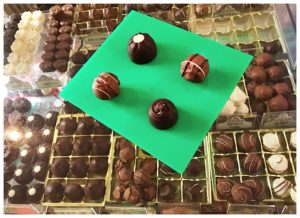 My recommendations here are the Black Forest ganache and, for those who enjoy texture in their chocolates, the macadamia and hazelnut truffles.
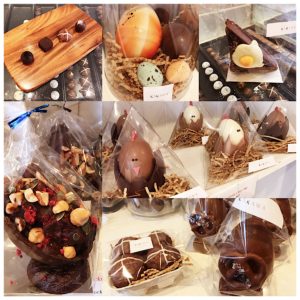 There are about 40 different Easter specials at Kakawa. David, one half of the Kakawa duo, proudly declares as I inquire about their spread. Try one or a pack of four hot cross buns – cinnamon-spiced milk chocolate ganache, enrobed in milk chocolate. It’s soft, light and creamy, with just the right intensity of spice. For the more adventurous, there’s the multi flavoured quail eggs, the “fried egg on toast” (caramel flavoured marshmallow coated in dark, milk and white chocolate shaped like a cracked egg, and sprinkled with praline powder), honeycomb egg, rocky road egg and many more. The hardest decision is which one to choose – the variety is truly impressive.
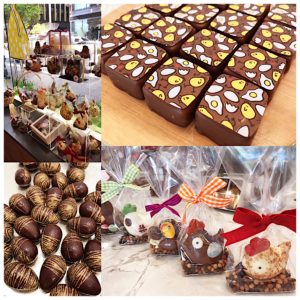 What an eye catching display of beautifully hand-painted eggs, bunnies and chickens, lining the display window! Once inside, the visual feast continues with many a cute and nicely wrapped bunnies, chickens and eggs. My top pick is the creative Easter praline – dual layer of caramelised macadamia on a base of lemon myrtle-infused white chocolate ganache. The aroma conjures up memories of freshly-popped caramel popcorn, and the flavours and texture of the caramelised macadamia praline are just divine.
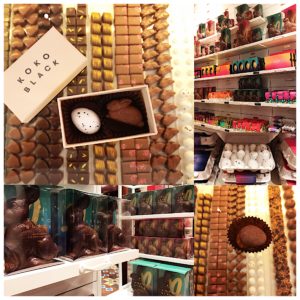 This Melbourne-based establishment doesn’t disappoint, with multiple Easter treats to suit many a discerning taste buds. Fans of pralines and ganaches can choose between the hazelnut praline quail egg, hazelnut praline bunny or the hot cross bun, the latter being a spiced ganache-filled, egg-shaped dark chocolate truffle, dusted in cocoa powder. The Easter range here also extends from plain solid and moulded eggs and bunnies to inventive flavoured eggs such as the caramelised coconut, hazelnut and cocoa nibs and salted cashew nut brittle, all attractively packaged.
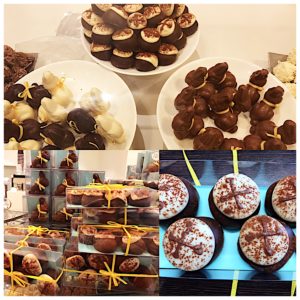 The hot cross buns are Adora-ble (pun intended?). These decadent, adult-only treats comprise tri-layers of chocolate – chocolate cake jazzed up with a dash of rum, coconut and cherries, then enrobed in dark chocolate and topped off with white chocolate. Why stop at one when you can indulge in a pack of six? If you’re shopping for the kids, there’s a choice of plain milk, dark or white chocolate rabbits as well as a selection of cutely decorated Easter shortbread, chocolate filled eggs and hampers.
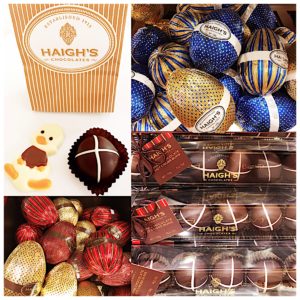 The classic favourites are back again. Haigh’s version of the hot cross bun is chewy chocolate fudge, flavoured with fruit and spices, and coated in dark chocolate. Rather more-ish, I might add, so they made them in packs of six too. The solid white chocolate duck is another Easter special, almost too cute to eat. There’s also an abundance of solid and moulded chocolate eggs in multiple sizes and coloured foil wrapping.
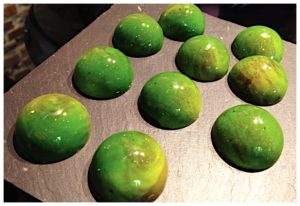 I’ve mentioned the term in numerous posts, in connection with well made chocolates. Now, let’s aim to explore the What, Why and How of “temper”.
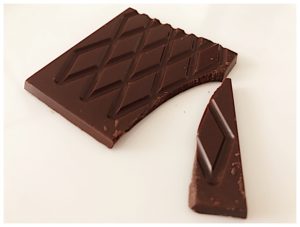 Tempering enhances the structure of chocolate. Because the beta crystals are tightly bound, it takes more physical effort to pull them apart. This is why when well tempered chocolate is broken apart, you hear the characteristic snap. Untempered or poorly tempered chocolate breaks apart easily and may crumble.
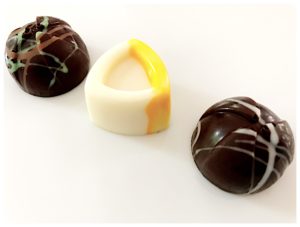 Tempering enhances the appearance of chocolate. The stable alignment of the beta crystals results in the glossy, shiny sheen on the surface of well tempered chocolate. Untempered or poorly tempered chocolate appears dull or matt, and over time, white or light brown patches may start to appear. The latter is caused by a phenomenon called fat bloom, whereby the less stable alpha crystals deposit on the surface of the chocolate.
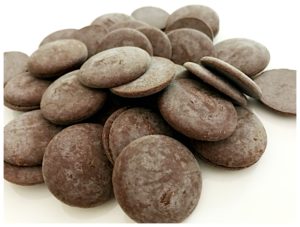 Tempering enhances the mouthfeel of chocolate. The beta crystals are the finest of the cocoa butter crystals. Together with variabilities in the production process namely the size of the winnowing sieve and duration of conching, tempering creates the smooth and even texture of chocolate.
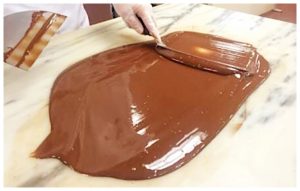 Untempered chocolate is heated to 45ºC, after which two thirds of the melted chocolate is poured onto a clean, cool marble or stone surface. The melted chocolate is spread and worked until the consistency starts to thicken and the temperature reaches 27ºC to 28ºC. At this point, the tempered chocolate is added back to the untempered chocolate and mixed in thoroughly to create the working chocolate.
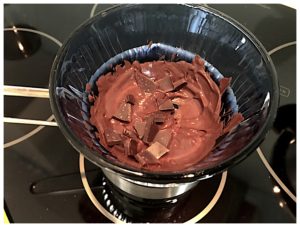 Untempered chocolate is heated to 45ºC. To the melted chocolate, another 25% of untempered chocolate is added. The mixture is stirred vigorously until all the chocolate has melted, to create the working chocolate.
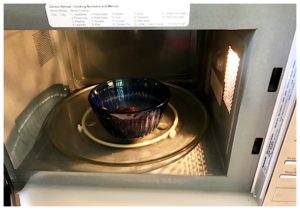 Untempered chocolate is heated in a microwave, in bursts of 30 seconds and while stirring in between, until the proportion of solid to melted chocolate is roughly 50:50. This mixture is then stirred until all the chocolate has melted, to create the working chocolate.